Army Helicopter Training Near DCA Runs Into a Rule That Excludes Training
Federal Register rule 2026-01226, effective 23 January 2026, says routine helicopter training near Reagan National is not an essential operation. Politico reported the Army may want training back as soon as the week of 6 December, and that the FAA has no formal request yet.
Organizational byline
5 min read
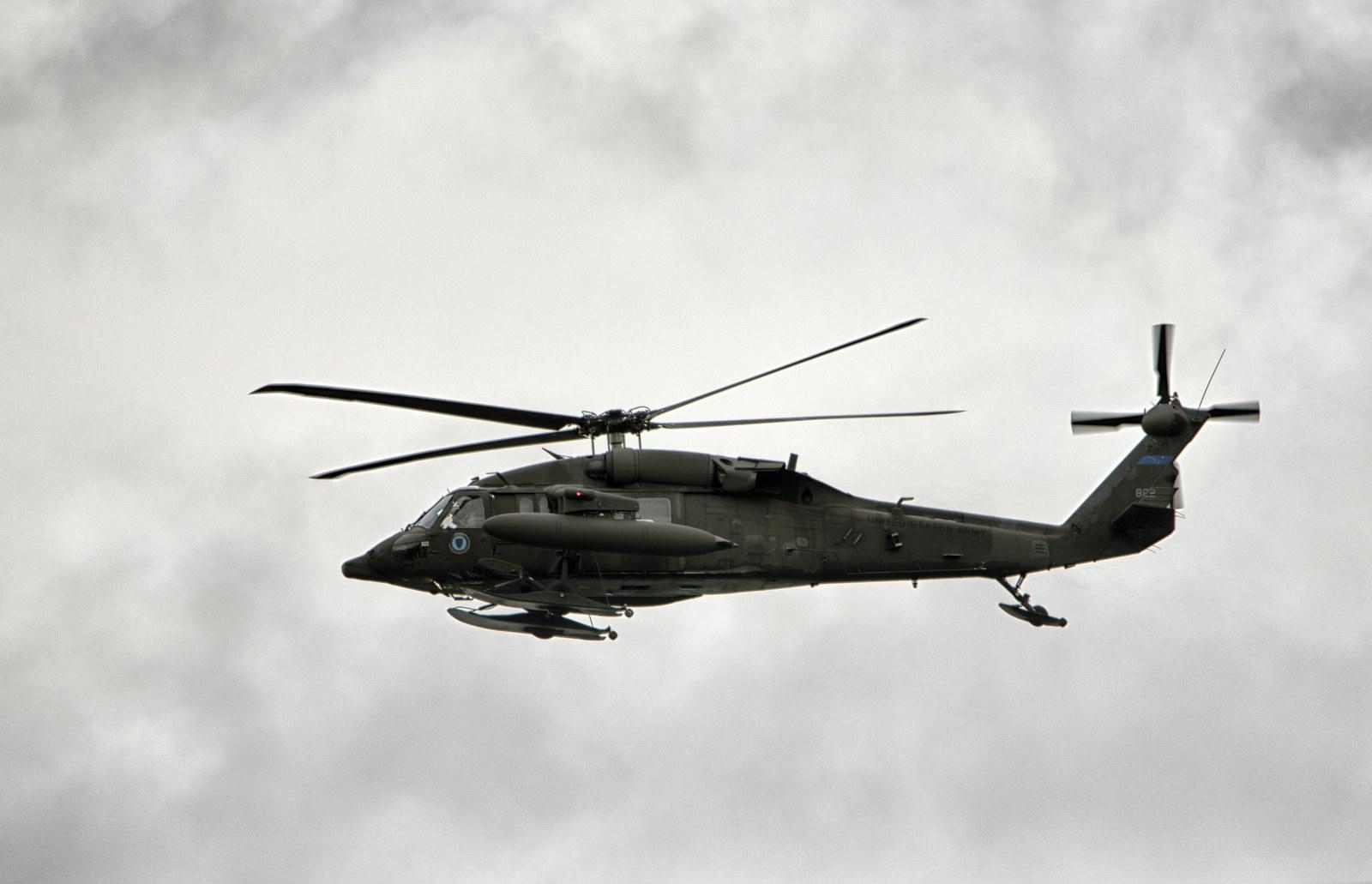
Analysis. The US Army wants helicopter training back near Ronald Reagan Washington National Airport, Politico reported on 23 November 2026. The rule already in force says routine training is not an essential operation in the restricted airspace over the Potomac. The Army and FAA remarks in this piece that come through Politico are labeled that way. They are not an Army news release or an FAA news release announcing a restart.
What the rule already says
The text is the FAA interim final rule "Flight Restrictions in the Vicinity of Ronald Reagan Washington National Airport (DCA)," document number 2026-01226, published at 91 FR 2840. Docket FAA-2026-0199. Amendment 93-105. RIN 2120-AM14. It adds 14 CFR part 93, subpart X. It took effect on 23 January 2026. Comments were invited through 23 February 2026, and the FAA said it would later replace the interim rule with a final rule after reviewing them. The restriction is in effect now.
It permanently restricts helicopters, and powered-lift aircraft operating in the vertical-lift flight mode, in a designated area over the Potomac near DCA, unless the operation is essential.
The designated area, section 93.373, is airspace from the surface to and including 1,500 feet mean sea level. The preamble describes it as the area between the Memorial Bridge, Hains Point and the Wilson Bridge, with the full coordinate boundary in the rule text.
After the 29 January 2025 midair collision, the FAA issued a temporary flight restriction that, in the rule's words, "effectively closed Washington Route 4 between Hains Point and the Wilson Bridge." The interim rule "fully and permanently implements" that step and an urgent NTSB recommendation. It prohibits non-essential helicopter and vertical-lift traffic "on and near the closed portion of Washington Route 4 and extends the prohibition over a broader area, regardless of runway use." The collision, as the rule states it, killed all 67 people on the helicopter and the fixed-wing aircraft.
The only exceptions
Section 93.375 is a short list. These are the essential operations, and they are narrow:
- Lifesaving medical flights.
- Active law enforcement involving responses to ongoing criminal activity.
- Active national security directly involving national defense or counterintelligence.
- Continuity activities for the federal government, to keep essential governmental functions running in emergencies.
- Transportation of the President or the Vice President of the United States.
The rule then says: "Proficiency evaluation flights, other transportation of personnel not directly involved in an essential operation, and routine training operations are not essential operations as provided for in paragraph (b) of this section."
The preamble adds: "In short, essential helicopter operations in this area should be exceedingly rare."
Law enforcement here is an active response to an ongoing crime. National security is active national security that directly involves national defense or counterintelligence. Presidential transport is the President or the Vice President. The rule does not add a free-standing air-defense exemption, or a general law-enforcement exemption.
When an essential helicopter or vertical-lift flight must enter the area, air traffic control is to manage the fixed-wing traffic. That includes local procedures that restrict use of Runways 15/33 or 4/22 for arrivals or departures.
The January news release
On Thursday 22 January 2026 the FAA published a news release saying the interim rule would appear on 23 January and take effect immediately. The page includes comments from Transportation Secretary Sean P. Duffy on securing the skies after "that horrific night in January," and from FAA Administrator Bryan Bedford on making the post-crash improvements permanent.
The release lists steps already taken. They include eliminating mixed helicopter and fixed-wing traffic near the airport, closing Route 4 between Hains Point and the Wilson Bridge, requiring ADS-B Out in revised military agreements, discontinuing Pentagon takeoffs until procedures and technical issues were fixed, eliminating visual separation within 5 nautical miles of DCA, and publishing modified helicopter routes and zones farther from DCA's flight paths. It also notes October 2025 updates to helicopter routes and zones at DCA, Dulles and BWI.
Reported by Politico
Politico reported that the Army intends to resume the helicopter flights. A spokesperson told Politico they could return as soon as the week of 6 December. Politico reported that the FAA said it had not received a formal request from the Army. The Army spokesperson told Politico: "Our intent is to make sure all the stakeholders are aware and have proper coordination with FAA, and make sure Congress is aware as well." The FAA line, as Politico reported it, was: "Approval from the agency is required before any training in the area can restart."
The Independent's 23 November account, by Rhian Lubin, attributes those points to Politico. This note does not upgrade them to an Army or FAA press release. No standalone Army or FAA newsroom item announcing a training-restart request was found alongside the Politico report.
Training does not fit the exception
If the Army wants routine training back inside the flight-restrictions area, that request sits against section 93.375 as it stands. Routine training is one of the operations the rule says are not essential. Restarting it would appear to require FAA approval and, depending on how "the area" is defined, a change to the rule, not only a scheduling request. The FAA line Politico reported, that approval is required before training can restart, is consistent with that.
The flights the rule already allows remain the narrow ones: lifesaving medical, active law enforcement against an ongoing crime, active national security directly involving national defense or counterintelligence, government continuity, and transport of the President or the Vice President.