
CASA's Broad-Area BVLOS Draft Is Guidance, Not a Flight Permit
Draft Annex B to AC 101-06, open for comment until 7 December 2026, describes ReOC pathways for broad-area BVLOS. It is not a new binding rule and it does not authorise a flight.
Organizational byline
Updated November 10, 2026
7 min read
CASA opened consultation on 9 November 2026 on draft Annex B to Advisory Circular AC 101-06, "Broad area BVLOS operations." Comments close 7 December 2026. The text reviewed for this article is the Consultation Hub PDF marked draft, file CASA-04-7368, version 1.0, November 2026. It is proposed guidance. It is not a new regulation, and holding or reading it does not authorise a flight.
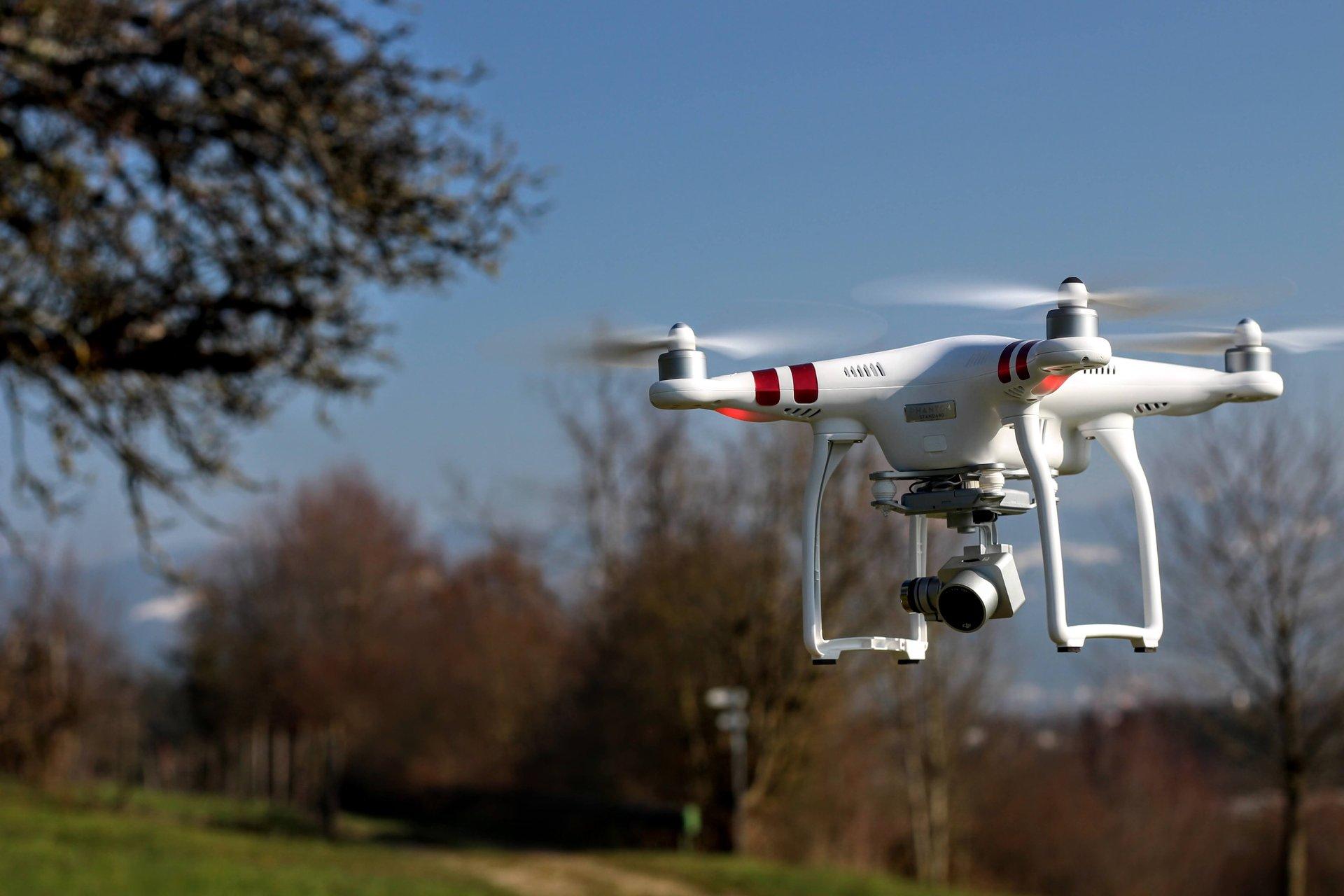
The photograph is a DJI Phantom 3 Standard, taken on 19 March 2016. The Commons description calls it a remote-controlled helicopter. The picture is a quadcopter in flight. It is not an Australian operation and not an aircraft the draft approves.
What the draft says it is
The annex is written for remotely piloted aircraft operations under a remotely piloted aircraft operator's certificate, a ReOC. It says it is not for model aircraft, excluded RPA or micro RPA. A ReOC holder that meets a pathway may be eligible for a broad-area authorisation under CASR 101.029 or 101.030. That authorisation, if granted, may carry the approvals or exemptions the draft lists. Eligibility is not the authorisation.
CASA's 9 November release says the draft builds on pathways introduced through Temporary Management Instruction TMI 2025-03. The draft's own background says a trial using the SORA method led CASA to establish broad-area approvals as an ongoing process. This article did not retrieve TMI 2025-03, so it does not describe that instrument's operative text. The draft still says, in its data section, that operators are "approved in accordance with this TMI." That label is inside a document that is out for comment as an annex to an advisory circular.
A US cargo-drone approval is a different question, covered separately in what is actually authorised for autonomous cargo drones. The FAA's Part 108 BVLOS proposal is also still a proposal, as set out in the 2026 drone-delivery rules explainer.
Four pathways, and one mismatched sentence
The draft sets four pathways. The digit after the letter is the minimum number of ground-risk mitigations. The no-mitigation end of each pathway is the narrow one.
| Pathway | Aircraft, as the draft states it | No-mitigation case |
|---|---|---|
| A | Under 1 metre characteristic dimension and under 25 m/s | A0, up to a lightly populated area, under 50 people per km². No weight limit is stated. |
| B | 1 to 3 metres and under 35 m/s | B0, up to a scarcely populated area, under 5 people per km². No weight limit is stated. |
| C | See the sentence problem below | C0, an isolated area, under 0.5 people per km². No weight limit is stated. |
| D | Outside the prescribed pathways | A pre-application meeting and a safety case before CASA will consider the application. |
Under the heading "Pathway C," the draft says "Pathway B is available" for an RPA between 3 and 8 metres and under 75 m/s. That is not the Pathway B size band two sections earlier. This article does not correct CASA's draft. Anyone using the 3-to-8-metre figures should treat them as the text under the Pathway C heading, and should notice the sentence.
Denser steps, A1, A2, B1, B2, C1 and C2, add shelter, a parachute accepted on CASA's RPAS compliance page, or both, and some options add a 25 kg gross-weight limit. The population numbers change at each step. They are in sections 3.1 to 3.3 and are not repeated here in full. CASA says it will publish a list of RPA it treats as having an equivalent ground-risk profile.
Characteristic dimension is wingspan for a fixed-wing RPA, blade diameter for a rotorcraft, and the maximum distance between blade tips for a multirotor.
The responsible person, the fee estimate, and how long it lasts
Each ReOC holder nominates a responsible person: an employee who conducts the BVLOS area feasibility assessments. A person can hold that role for only one ReOC. CASA interviews the nominee, except that applicants for only A0, B0 or C0 must nominate someone but CASA will not assess that person. If the role falls vacant, the holder notifies CASA within 21 days. Until a replacement is approved, operations stay inside areas the former responsible person already assessed, and no new area assessment is done. Each area is reviewed at least every 12 months.
The draft's fee estimate is time, not a dollar figure. The base assessment is 12 hours, covering the procedures, the interview and issuing the authorisation. First-time BVLOS applicants may be estimated above 12 hours. The estimated fee is paid before CASA starts. No hourly rate is printed in the annex.
An authorisation runs to the expiry date the applicant requests. If none is requested, it generally expires with the ReOC. Renewal is applied for before expiry. If the responsible person is unchanged, CASA will generally not interview again. The renewed authorisation keeps pathways previously approved under TMI 2025-03. The applicant must show a non-significant operations-manual change that reflects the draft's Appendix A sample procedures.
Limits that are easy to skip
Section 3.5 applies to every pathway. By day, section 3.5 states a maximum operating height of 400 ft (120 m) AGL. Any higher daytime limit depends on the full conditions in section 3.5 and Appendix A, read together. This article does not split those conditions into separate exceptions, and it does not state a standalone clearance above 400 ft AGL. Night is a different limit: with ADS-B OUT, 500 ft below the lower limit of overlying controlled airspace; without it, the draft sets the maximum at the lowest safe altitude for the area. That is the draft's wording, and it is not the day figure.
The forecast visibility line is also easy to smooth incorrectly. The draft says visibility in the planned area is either under 600 metres or over 5,000 metres. It does not say "at least 5 kilometres" and leave the low band out. When cloud is more than 4 octas, the base is at least 1,000 ft AGL, unless visibility already keeps VFR aircraft out. An emergency-services operation, as the annex defines it, is excused from those weather limits.
A remote pilot needs an IREX or BVLOS OCTA pass, unless the operation is A0, B0 or C0 and uses a supervising remote pilot under CASA EX63/26. This article did not retrieve that exemption.
A remote operations centre, and flying more than one RPA at a time, can sit inside a pathway only with a separate CASA assessment unless that piece was already approved. Flying within 30 metres of a non-active participant, or below the minimum safe deployment height of a required parachute, is outside the annex.
The draft says approved operators may have to keep the listed data for seven years and, if an RPA leaves the flight geography, email [email protected] within seven days. Reporting periods in the approval instrument can differ. None of that is a permission to launch.
Comments go through the Consultation Hub survey, or by email to [email protected] if the survey cannot be used. CASA says it will publish responses unless confidentiality is requested, and then a summary of consultation. The final annex, if CASA issues it, would still be guidance for Part 101 applications.


