
When Fire Protection Takes Flight: Getting Scheduled Extinguishing Agents Right
How Australian operators and MROs manage halon and other scheduled extinguishing agents — licences, permits, competency and emissions prevention.
Communications Leader, Fire Protection Industry (ODS & SGG) Board
Updated November 4, 2026
5 min read
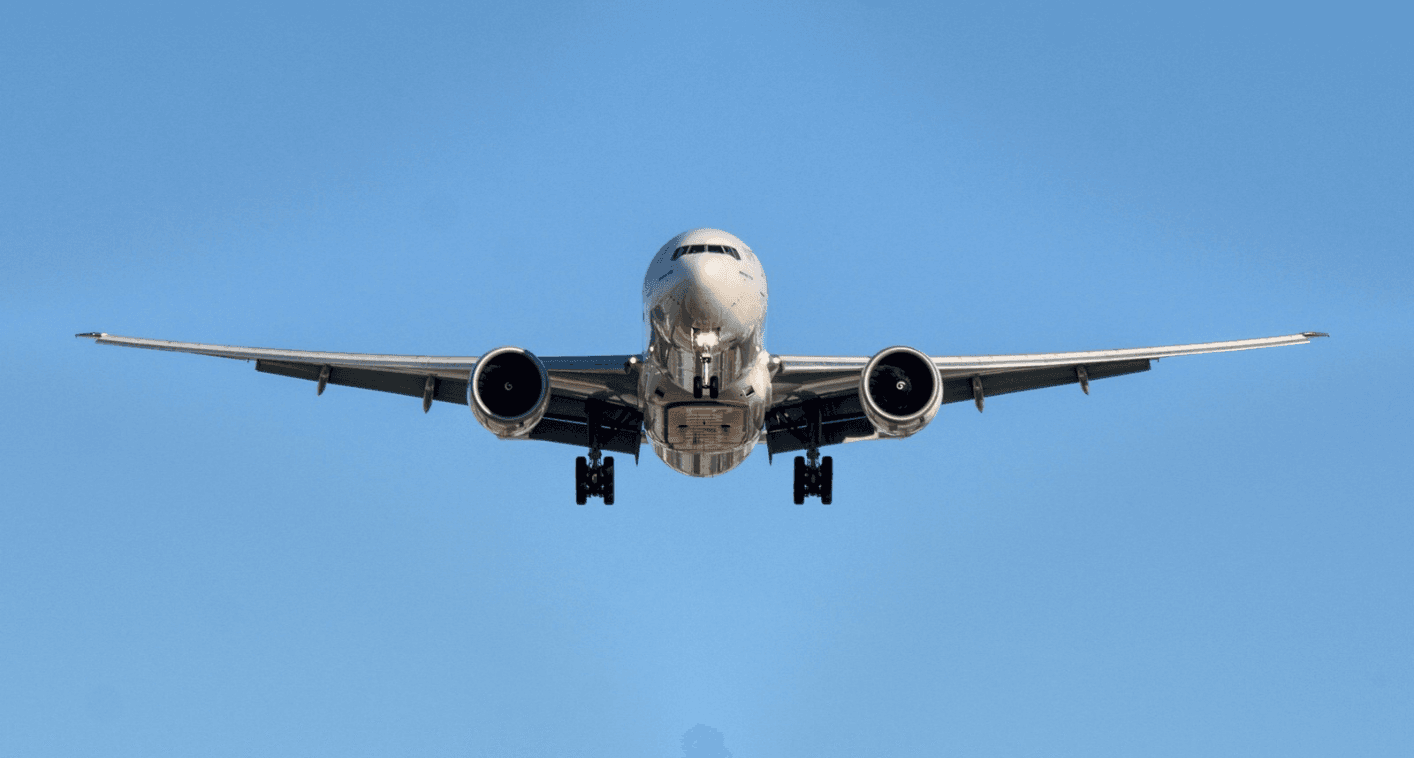
Fire suppression systems play a critical role in protecting aircraft, passengers and crew. On modern aircraft, fixed fire protection systems are installed in designated fire zones where fire detection and extinguishing equipment is required. These include engines and auxiliary power units (APUs), cargo and baggage compartments, lavatories, electronic bays, wheel wells and bleed air ducts. Portable extinguishers also form part of an aircraft’s fire protection arrangements.
When these systems contain scheduled extinguishing agents such as halon, safe management requires more than routine maintenance. Aviation operators and maintenance providers must understand their licensing and permit obligations, keep systems properly maintained, and take steps to minimise environmental impacts.
Why aviation still relies on halon
Halon has been widely used in aviation because of its effectiveness and the particular demands of aircraft fire protection. It suppresses fires by interrupting the chemical reactions that sustain combustion and is effective on flammable liquid and electrical fires. It is electrically non-conductive, leaves no residue and can be used where clean-up would be difficult. Its ability to disperse effectively, and its efficient use of weight and space, also matter in aircraft design.
Those characteristics help explain why replacing halon in aviation has proved technically challenging. Any alternative must demonstrate equivalent fire-suppression performance in the relevant application while meeting demanding aircraft requirements for weight, space and operational performance.
However, while highly effective at suppressing fires, halon is an ozone-depleting substance (ODS) and a potent greenhouse gas. Other scheduled extinguishing agents may also be classified as ODS or synthetic greenhouse gases (SGGs). When released into the atmosphere, these substances can contribute to ozone depletion and/or global warming. Halon 1301, for instance, has a global warming potential (GWP) of 6,290 and Halon 1211 a GWP of 1,750, relative to carbon dioxide. Because of those environmental impacts, responsible handling and emissions prevention matter wherever these agents are used.
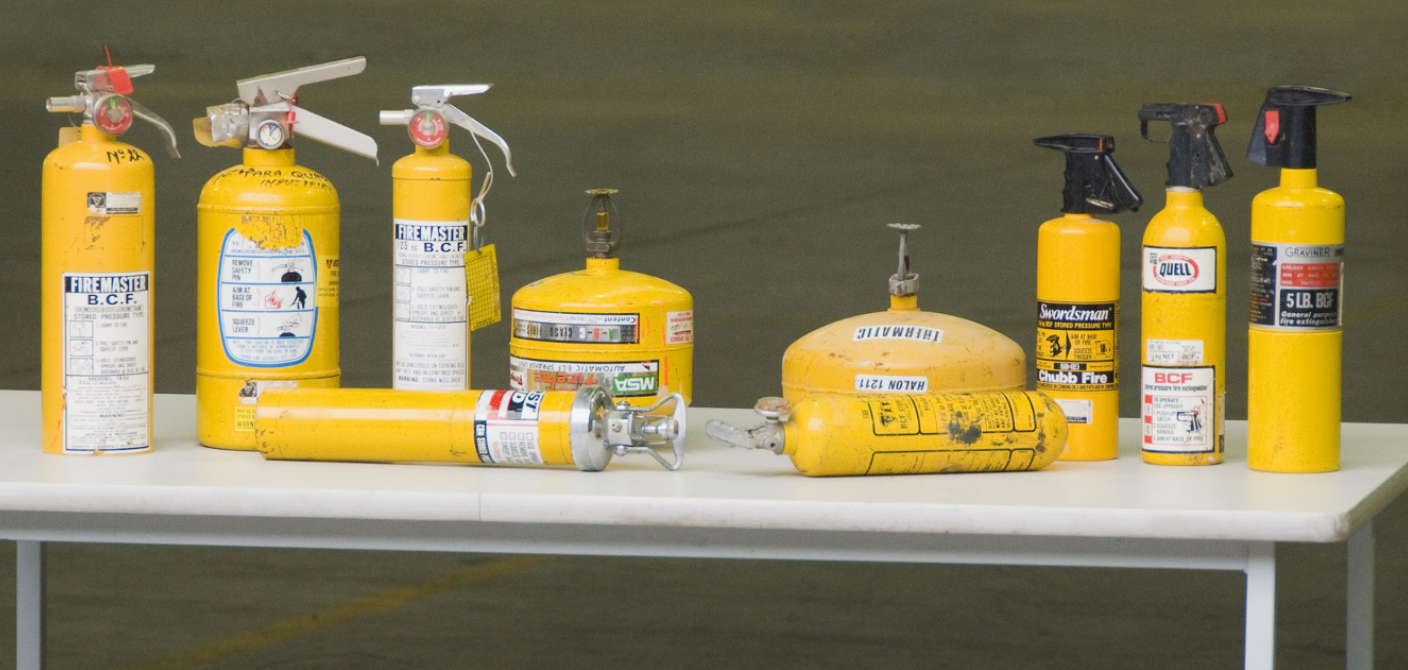
Courtesy the Fire Protection Industry (ODS & SGG) Board
Australian licensing and permit obligations
This is why understanding Australian licensing and permit requirements for scheduled extinguishing agents matters. In Australia, the Fire Protection Industry (ODS & SGG) Board (FPIB) administers the fire protection division of the Ozone Protection and Synthetic Greenhouse Gas Management Regulations 1995 on behalf of the Australian Government. The framework sets requirements for how scheduled extinguishing agents are acquired, stored, used, handled, disposed of and maintained.
Aircraft Maintenance Engineers (AMEs) and Licensed Aircraft Maintenance Engineers (LAMEs) who handle scheduled extinguishing agents must meet the applicable competency requirements. That includes completing CPPFES2043A – Prevent ozone depleting substance and synthetic greenhouse gas emissions, or an accepted equivalent assessment.
Other technicians who are not AMEs or LAMEs, and who undertake work involving scheduled extinguishing agents, must hold the appropriate Extinguishing Agent Handling Licence (EAHL) where required. Before engaging a technician, aircraft operators and maintenance providers should check that the individual has the necessary licence, competency and authorisation for the work.
Importantly, an EAHL is not required simply to use an aircraft’s installed halon fire-suppression system in response to an actual fire emergency. The Regulations allow a scheduled extinguishing agent to be discharged when the equipment containing it is being used for its designed purpose, such as responding to a fire. That is different from installing, servicing or handling the agent as part of maintenance work, where the relevant licensing and competency requirements apply. Discharges for testing or training are subject to separate regulatory requirements and require the appropriate fire protection industry permit.
Halon possession and reporting
Halon is also subject to specific possession restrictions. Under the Regulations, it is an offence to possess halon unless it is contained in fire protection equipment installed in, or carried in, an aircraft. Businesses trading in halon must also hold a Halon Special Permit (HSP) and follow its conditions. This includes submitting quarterly usage reports to the FPIB detailing the quantities of halon held on site, acquired, recovered, supplied, used, sold or sent for destruction during each reporting period. Those reports help keep accurate records of scheduled-agent movements and keep HSP holders compliant with their permit conditions.
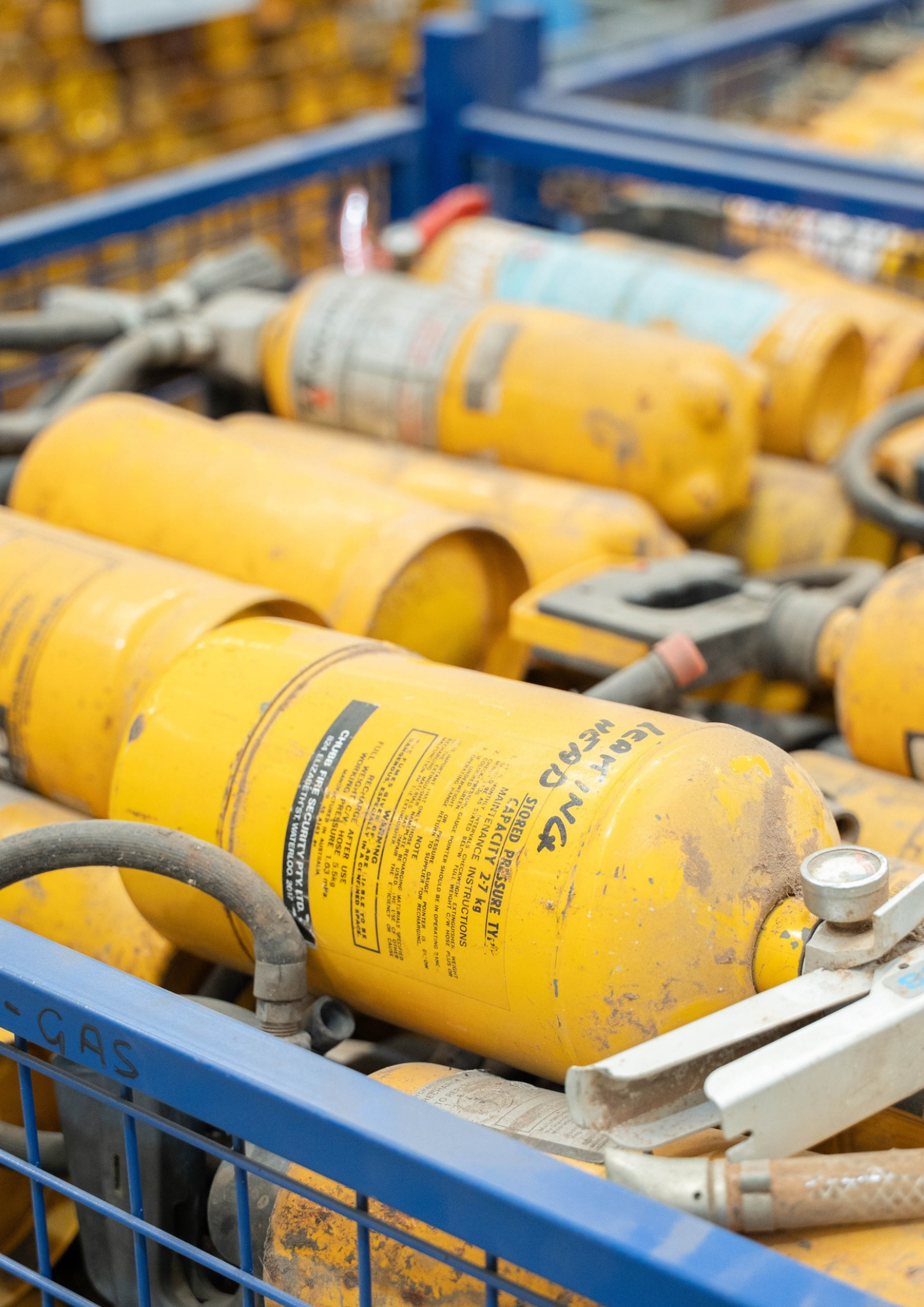
Courtesy the Fire Protection Industry (ODS & SGG) Board
Best practice to prevent emissions
Preventing emissions through best practice is a critical part of how the aviation industry can protect the environment. Best practice helps ensure fire-suppression systems perform reliably in an emergency while minimising the risk of releasing ODS and SGGs. Systems should be correctly designed, installed and commissioned, then maintained in accordance with applicable requirements and manufacturer recommendations. Ongoing maintenance helps identify leaks, faults or other issues before they result in an accidental discharge, while supporting the efficiency and longevity of the equipment.
Operators and maintenance providers should also ensure scheduled agents are acquired, stored, handled and disposed of appropriately. That includes taking care when working with cylinders and associated equipment to avoid accidental releases. Any discharge must be managed and reported to the FPIB in accordance with applicable requirements. Understanding the characteristics of the agent in use, and following the correct procedures when maintaining associated equipment, are important parts of responsible management.
Safety and environmental responsibility together
Aviation fire protection involves balancing stringent safety requirements with environmental responsibility. Understanding the characteristics of scheduled extinguishing agents, meeting licensing and permit obligations, engaging competent technicians and maintaining systems properly all contribute to reliable fire protection and reduced avoidable emissions.
By making compliance and best practice part of routine maintenance and operational decisions, aviation businesses can help protect aircraft and the people who rely on them, while supporting Australia’s efforts to protect the ozone layer and reduce the climate impacts of scheduled extinguishing agents.
For more information about managing aviation fire suppression systems and scheduled extinguishing agents, visit the FPIB aviation guidance page.


