FAA Expands the Lycoming LW-13445 Piston-Pin AD
AD 2026-22-13, effective 24 November 2026, replaces AD 2026-17-10 for listed Lycoming models with a LW-13445 piston pin made from 7 January 2021 through 15 December 2025, or of unknown date.
Organizational byline
Updated November 9, 2026
6 min read
The FAA has adopted AD 2026-22-13 for specified Lycoming piston engines that have a piston pin part number LW-13445 from a defined manufacture window. The rule was issued on 30 October 2026, published in the Federal Register on 9 November 2026, and is effective 24 November 2026. It replaces AD 2026-17-10 (amendment 39-23454, 91 FR 55451, 28 August 2026). The new amendment is 39-23515, Docket No. FAA-2026-13797.
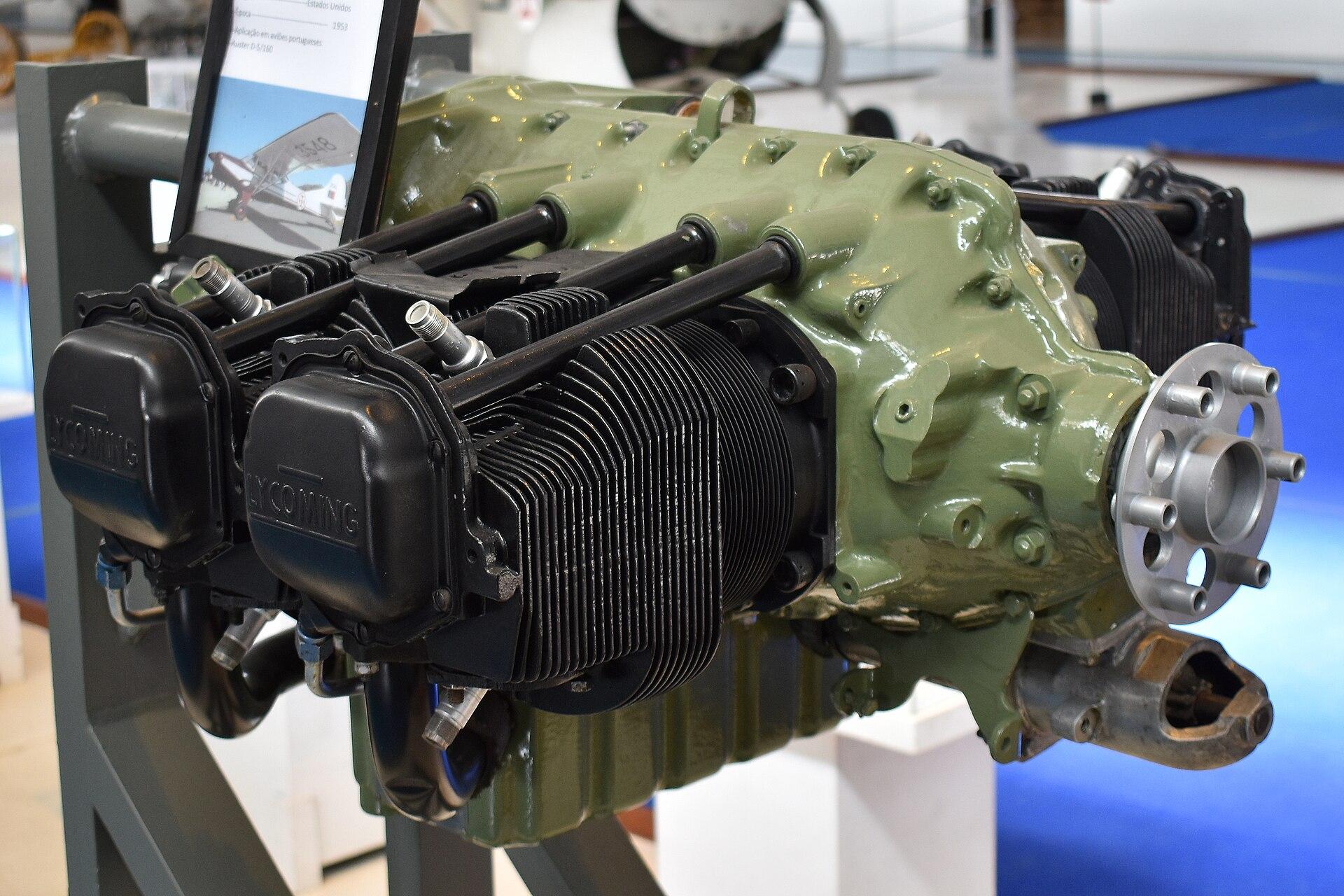
The photograph shows a Lycoming O-320-B2B on museum display. That dash model is one of the models named in the AD's table. The picture does not show a piston pin, and it does not establish that the displayed engine has an affected pin.
Applicability
The AD applies only when three things line up: the engine model is in Table 1 of the AD, the installed pin is P/N LW-13445, and that pin was manufactured from 7 January 2021 through 15 December 2025. If the manufacture date cannot be determined, the AD applies. If the current LW-13445 pins were installed before 7 January 2021, the AD does not apply.
AD 2026-17-10 covered Lycoming O-235, O-540 and IO-540 engines with a certain pin. Since then, Lycoming identified additional models that are subject to the unsafe condition and identified some models in the earlier AD that are not. AD 2026-22-13 is the replacement text. It is not a directive for every Lycoming engine, and it is not a directive for every dash number in a series.
| Engine series | Dash models named in Table 1 |
|---|---|
| O-235 | -C1, -C1A, -C1B, -C1C, -C2A, -C2B, -C2C, -E1, -E1B, -E2A, -E2B, -F1, -F1B, -F2A, -F2B, -G1, -G1B, -G2A, -G2B, -H2C, -J2A, -J2B, -K2A, -K2B, -K2C, -L2A, -L2C, -M1, -M2C, -M3C, -N2A, -N2C, -P1, -P2A, -P2C, -P3C |
| O-320 | -A1A, -A1B, -A2A, -A2B, -A2C, -A2D, -A3A, -A3B, -A3C, -B1A, -B1B, -B2A, -B2B, -B2C, -B2D, -B2E, -B3A, -B3B, -B3C, -D1A, -D1B, -D1C, -D1D, -D1F, -D2A, -D2B, -D2C, -D2F, -D2J, -D3G, -E1A, -E1B, -E1C, -E1F, -E1J, -E2A, -E2B, -E2C, -E2D, -E2F, -E2G, -E2H, -E3D, -E3H |
| IO-320 | -B1A, -B1C, -B1D, -B1E, -B2A, -C1A, -C1B, -D1A, -D1B, -D1C, -E1A, -E1B, -E2A, -E2B |
| AIO-320 | -A1B, -B1B, -C1B |
| LIO-320 | -B1A, -C1A |
| AEIO-320 | -D1B, -D2B, -E1A, -E1B, -E2A, -E2B |
| VO-435 | -A1A (O-435-21), -A1B (O-435-6), -A1C (O-435-23, -23A, -23B, -23C), -A1D (O-435-6A), -A1E, -A1F, -B1A |
| TVO-435 | -A1A, -B1A (O-435-25A), -B1B, -C1A, -D1A, -D1B, -E1A, -F1A, -G1A, -G1B |
| O-540 | -J1A5D, -J1B5D, -J1C5D, -J1D5D, -J2A5D, -J2B5D, -J2C5D, -J2D5D, -J3A5, -J3A5D, -J3C5D, -L3C5D |
| IO-540 | -AB1A5, -J4A5, -W1A5, -W1A5D, -W3A5D |
A part eligible for installation is a pin that is not P/N LW-13445, or a LW-13445 pin that was not manufactured in that 7 January 2021 to 15 December 2025 window. An affected pin is a LW-13445 manufactured in the window, or a LW-13445 whose manufacture date is unknown.
The FAA splits affected engines into two groups by pin date:
- Group 1 is every affected engine except those whose LW-13445 was manufactured from 23 March 2023 through 15 December 2025, and except those whose manufacture date is unknown. In practice that is the earlier known window, 7 January 2021 through 22 March 2023.
- Group 2 is a LW-13445 manufactured from 23 March 2023 through 15 December 2025, or a LW-13445 whose manufacture date is unknown.
The subject code is JASC 8530, Reciprocating Engine Cylinder Section. The FAA says the AD was prompted by Lycoming reports of metal particulates in the oil during oil changes and two non-detectable engine failures. The unsafe condition the agency describes, if not addressed, could result in engine failure, loss of thrust control, an in-flight shutdown, damage to the airplane and loss of control.
What the AD requires
The compliance clock starts at the 24 November 2026 effective date. The actions below are the AD's, including one inspection step that Lycoming Mandatory Service Bulletin 667A does not contain.
Within 5 hours time-in-service after the effective date, Group 1 engines and Group 2 engines do an oil change and a visual inspection of the oil filter, oil pressure screen and oil suction screen for metal particulates. Group 2 engines that already have 150 hours or more time-in-service on the effective date are the exception. They do not get that 5-hour inspection window. They replace any affected pin before further flight.
If the 5-hour inspection finds metal, any affected pin must be replaced before further flight. Replacement follows the required action of Lycoming MSB 667A, dated 12 March 2026, as it applies to the engine model. Guidance for identifying metallic solids is in Lycoming MSB 480F, dated 25 May 2017. That bulletin is guidance. It is not the AD's compliance time.
Where a Group 1 engine has a pin manufactured from 7 January 2021 through 22 March 2023 and the inspection finds no metal, replacement waits for the next maintenance event that removes a cylinder with an affected pin, or the next overhaul, whichever comes first after the effective date. The overhaul limit is the time between overhaul in Lycoming Service Instruction 1009BF, dated 20 July 2026.
Group 2 engines with less than 150 hours time-in-service on the effective date replace any affected pin within 25 hours time-in-service after the effective date, and in any case before or upon reaching 150 total hours time-in-service since the affected pins were installed, whichever comes first.
After the effective date, an affected pin may not be installed on any engine. The AD does not adopt any service-bulletin instruction to return parts to the manufacturer.
Special flight permits under 14 CFR 21.197 and 21.199 may be issued for the replacement requirements if no metal particulates are found. For a Group 2 engine that is outside the 5-hour inspection paragraph, an oil change showing no metal is required before a permit. Special flight permits are not allowed for the oil-filter, oil-pressure-screen and oil-suction-screen inspection itself.
Keeping the model, the pin date and the one-time versus repetitive actions distinct is the same records problem described in the AD compliance software guide. The guide does not determine whether a particular engine is inside this AD.