FAA Says Its SMART Planning Tool Now Covers All 22 Centers
The FAA says SMART, a traffic-planning tool, is now in use across all 22 air route traffic control centers. Since 21 September it reports 180 rerouted flights, about 10 minutes and almost 80 gallons saved on average. Those are the agency's figures. The tool does not control aircraft.
Organizational byline
Updated November 12, 2026
4 min read
News. The FAA says its Strategic Management of Airspace, Routes and Trajectories system, SMART, is now being used in the airspace of all 22 air route traffic control centers. The statement is dated 10 November 2026 on the agency's general-statements page. It says an initial rollout to the National Capital Region in September is what the nationwide step follows.
The same note gives three figures "since SMART started Sept. 21": it "helped reroute 180 flights," "saved an average of 10 minutes per flight," and "saved an average of almost 80 gallons of fuel per flight." Those numbers are the FAA's. They are printed as the results of that reroute set. They are not a national delay average, and they are not a count of every flight the centers handled.
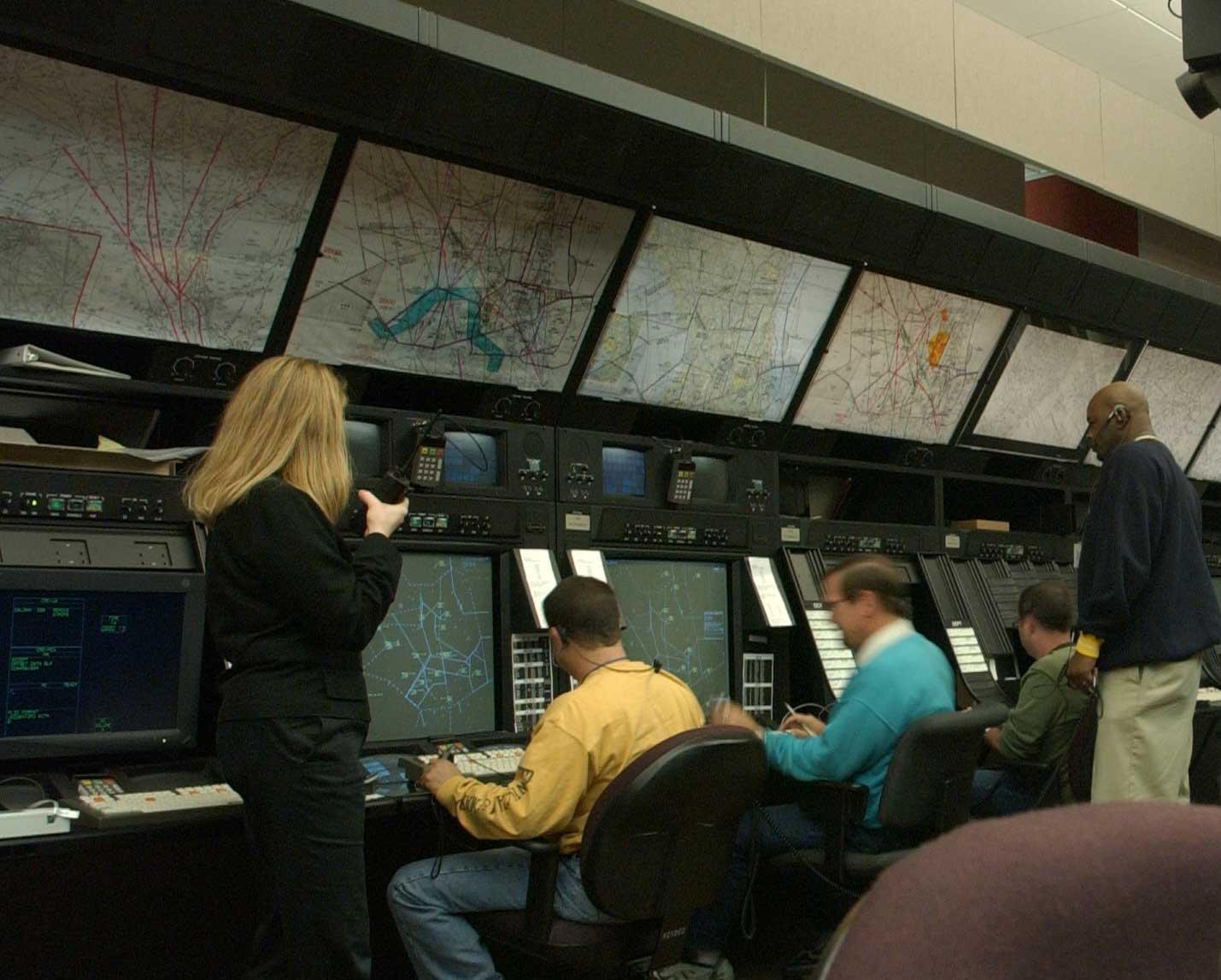
The photograph is the Washington Air Route Traffic Control Center in Leesburg, Virginia. Commons files it as an FAA image and does not date it. Leesburg is an en-route center. The SMART specialists in the FAA's statement work in a center in Washington, D.C. The Command Center that receives their recommendations is in Warrenton, Virginia. The photograph shows neither room, and it does not show SMART.
What the FAA says the tool does
The 10 November statement calls SMART a cloud-based system that brings together 200 data streams, including weather, flight paths, traffic flow, and controller staffing. Specialists at the SMART center in Washington analyze and validate that data and send scheduling recommendations to the Air Traffic Control System Command Center in Warrenton. The Command Center then routes the recommendations to air traffic facilities "for local leadership to consider."
The FAA's one-page fact sheet describes the same idea from the planning side. SMART is a planning layer beside existing air traffic management systems. It uses the agency's account of airline schedules, weather, airport capacity, airspace conditions, and operational constraints to flag conflicts before departure, and it updates recommendations as the day changes. The sheet says the shared picture is meant to help the FAA, airlines, and operators agree on routes and departure times. It also says air traffic controllers "remain responsible for keeping aircraft safely separated" and that SMART "helps them do that."
The fact sheet says initial operations "begin in the Fall of 2026." It does not say "all 22 centers," and it does not contain the 180-flight, 10-minute, or 80-gallon figures. Those points are only in the 10 November statement. Where the two pages differ in tense, the dated statement is the later operational claim. The fact sheet is the description of the tool.
What it isn't
SMART, on these two FAA pages, is not a system that controls aircraft.
- It does not issue clearances. The statement calls the product "scheduling recommendations," and it says local leadership considers them. A recommendation a facility considers is not an instruction to a flight crew.
- It does not replace separation. The fact sheet leaves that job with controllers.
- It does not move an airplane. Nothing on either page says SMART is connected to an autopilot, a datalink clearance, or a tower or center scope as the controlling display.
- The 180 flights, the average of 10 minutes, and the average of almost 80 gallons are the FAA's figures for the period since 21 September. The statement does not say they are system-wide delay or fuel statistics. This article does not treat them that way.
- The fact sheet's goal line, "zero delays at the start of the day," is the agency's aim. It is not a result the 10 November numbers claim to have reached.
The general-statements page says its posts are information shared with the public that was not issued as a press release. This item is that kind of statement. It names no vendor, no software version, and no list of the 22 centers. The count of 22 is the FAA's, in the sentence that says SMART will now be used in the airspace of all of them.