EASA Sets A350 Stabiliser Inspections and a 78-Month Electrical Change
Final EASA AD 2026-0210, effective 17 November, sets repetitive A350 stabiliser-joint inspections. AD 2026-0214, effective 19 November, requires emergency electrical-unit replacement within 78 months.
Organizational byline
Updated November 10, 2026
5 min read
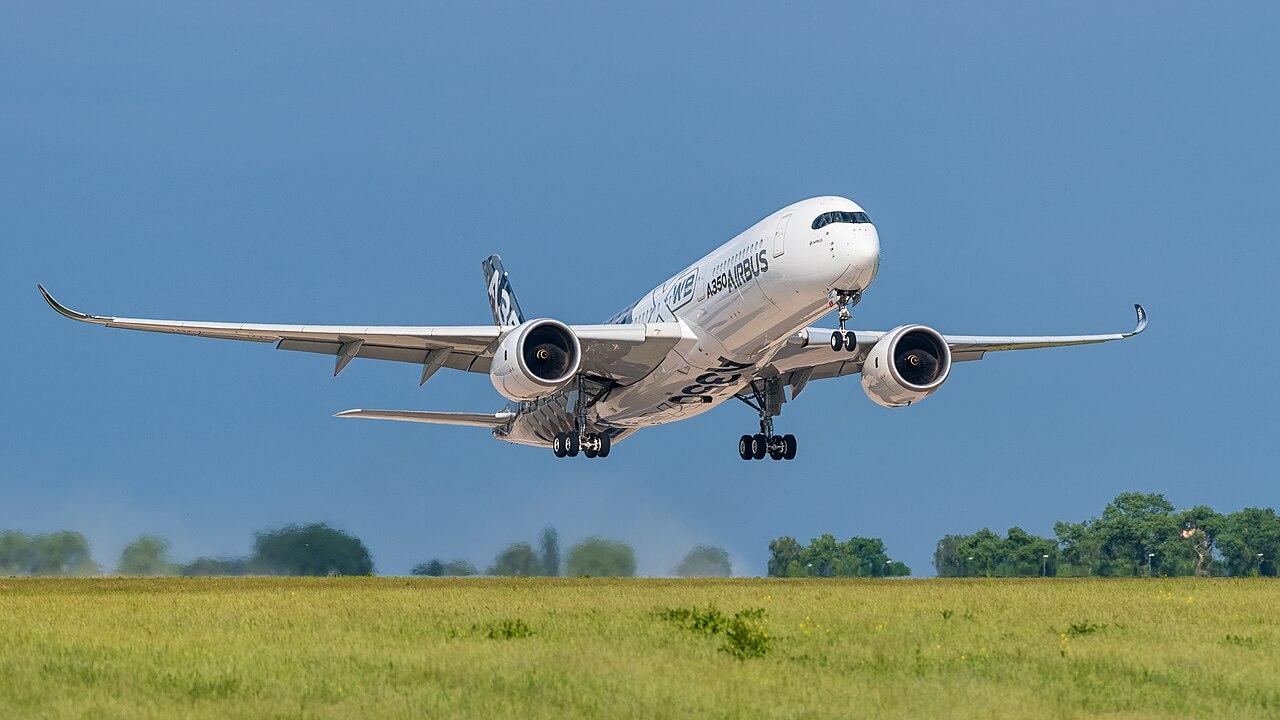
News. EASA issued two final A350 directives in the first week of November 2026. They share the A350-941 and A350-1041, and they take effect two days apart. AD 2026-0210 is a repetitive inspection of the trimmable horizontal stabiliser centre-joint pivot fitting. AD 2026-0214 is a modification of specified emergency electrical network management units, due within 78 months. Neither supersedes another AD. Both use type-certificate data sheet EASA.A.151.
Stabiliser centre joint, AD 2026-0210
EASA AD 2026-0210 was issued on 3 November 2026 and is effective 17 November 2026. It applies to Airbus A350-941 and A350-1041 aeroplanes, all manufacturer serial numbers. The PDF is EASA AD 2026-0210.
Group 1 aeroplanes are those on which Airbus modification 112564 has not been embodied. Group 2 aeroplanes are those on which that modification has been embodied. The affected areas are the upper and lower lugs on the trimmable-horizontal-stabiliser rear support fitting, left and right. The aeroplane reference date is the date of transfer of title on delivery by Airbus to the first operator, as referenced in Airbus documentation. The service bulletin is Airbus SB A350-55-P016, original issue dated 9 June 2026. Later approved revisions are acceptable.
EASA says several occurrences of cracked sealant, rotated attachment fasteners and migrated plain bushes were reported at the centre-joint pivot attachment fitting. Investigations determined that bush migration is primarily caused by insufficient interference fit between the plain bushes and the fitting lugs. If not detected and corrected, EASA says the condition could affect the structural integrity of the horizontal-tail-plane rear support fitting joint and possibly result in reduced control of the aeroplane.
Paragraph (1) requires a detailed inspection of the affected areas under the service bulletin before the Table 1 threshold, measured from the aeroplane reference date, and then within the Table 1 interval. The AD prints 12 400 and 51 600 with a space as the thousands separator.
| Group | Threshold | Repeat interval |
|---|---|---|
| 1 | 12,400 flight cycles, or 51,600 flight hours, or 12 years, whichever occurs first | 12,400 flight cycles, or 51,600 flight hours, or 12 years, whichever occurs first |
| 2 | 12 years | 12 years |
If a detailed inspection finds a discrepancy as defined in the bulletin, paragraph (2) requires the bulletin's corrective actions on the bulletin's compliance time. Note 1 says that may include contacting Airbus and doing the approved instructions, and may include follow-on actions. Reporting findings is not part of the applicable corrective action. Paragraph (3) names the terminating action as none.
The reason section describes the bulletin as calling, in case of findings, for a further detailed inspection for corrosion and a special detailed inspection for cracks, or corrosion preventive compound when applicable, and corrective actions before further flight. Paragraph (2) still leaves that timing in the bulletin. EASA posted the AD as PAD 26-110 on 18 September 2026 for consultation until 16 October 2026.
Emergency electrical unit, AD 2026-0214
EASA AD 2026-0214 was issued on 5 November 2026 and is effective 19 November 2026. It applies to Airbus A350-941 and A350-1041 aeroplanes, all manufacturer serial numbers, except those on which Airbus modification 120968 has been embodied in production. That production exception is not modification 112564 from the stabiliser directive. The PDF is EASA AD 2026-0214.
An affected part is an emergency electrical network management unit with part number 543CE06L18Y08 at amendment A, B or C, or with no amendment, or part number 543CE06L18Y09 at amendment A or with no amendment. A serviceable part is any such unit eligible under Airbus-approved instructions that is not an affected part. The acceptable modification instructions are Airbus SB A350-24-P165, P166, P167, P168, P169, P170 or P171, as applicable. P167 is cited at original issue dated 5 June 2026 or Revision 01 dated 1 August 2026. The other five of that set are cited at original issue dated 5 June 2026.
EASA says flight tests and laboratory work found incorrect control logic in the emergency bus tie contactor. Under specific conditions, including loss of main electrical supply or total engine flame-out after lockout protection has activated, that logic could drop all alternating-current busbars on one emergency side. EASA traces the cause to the unit's firmware at field-programmable-gate-array level, and says the result could cut power transfer between those busbars and compromise safe flight and landing.
Paragraph (1) requires, within 78 months after the effective date, concurrent replacement of each affected part with a serviceable part under approved Airbus instructions. The applicable service bulletin is an acceptable method. Paragraph (2) requires, depending on aeroplane configuration, a modification under SB A350-24-P028 or SB A350-24-P046 prior to or concurrent with the paragraph (1) work. Those two bulletins are cited at original issue dated 16 December 2019 and 31 January 2019. Paragraph (3) prohibits installation of an affected part after the paragraph (1) modification. The prohibition is not written as applying from the effective date to unmodified aeroplanes.
The AD was posted as PAD 26-120 on 6 October 2026 for consultation until 3 November 2026. EASA says no comments were received. Modification 120968 is a production exception on this electrical directive. It is not modification 112564, which only sorts the stabiliser threshold.