FAA Orders DA40 Passenger-Door Inspections
AD 2026-22-06, effective 7 December 2026, requires AFM revisions and passenger-door inspections on all U.S.-certificated Diamond DA40, DA40 F and DA40 NG airplanes.
Organizational byline
Updated November 10, 2026
6 min read
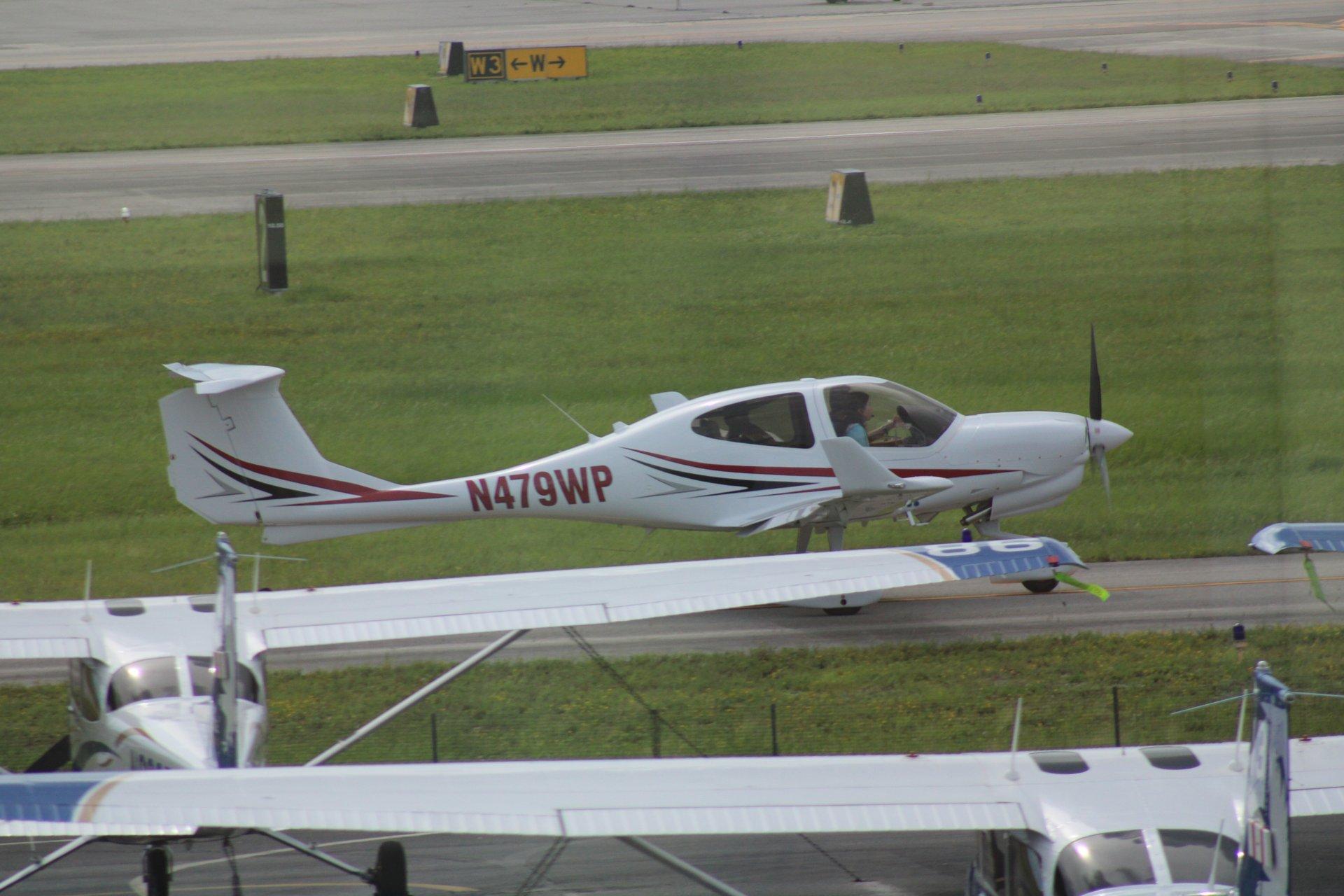
News. The FAA has adopted AD 2026-22-06 for every Diamond Aircraft Industries Inc. Model DA 40, DA 40 F and DA 40 NG airplane certificated in any category. The final rule was published in the Federal Register on 2 November 2026. The DATES section and paragraph (a) both say it is effective 7 December 2026.
The FAA says the AD was prompted by several reports of passenger-door separation in flight. Diamond attributed some of those events to a door that was not properly latched, followed by an attempt to latch it in flight. The manufacturer could not find a definitive root cause for the remaining occurrences. The unsafe condition the FAA describes, if not addressed, could damage the airplane structure and lead to loss of control and injury to people on the ground.
This is a final rule, not a proposal. Same-week proposals on the Pilatus PC-24 and the Boeing 757 power-transfer unit are in the AD watch brief. Those are still open for comment.
What the rule requires
Applicability is the whole U.S.-certificated DA 40, DA 40 F and DA 40 NG fleet, not a serial-number range. Amendment 39-23508, Docket No. FAA-2026-4633, Project Identifier MCAI-2025-01173-A. The subject code is JASC 5210, Passenger/Crew Doors. Transport Canada AD CF-2025-30, dated 23 June 2025, is the state-of-design action. The Canadian AD also covers the DA 40 D. The FAA AD does not, because that model has no FAA type certificate.
The FAA had proposed the AD on 13 May 2026 (91 FR 26952). Three commenters asked the agency to drop newer serial numbers, arguing that a secondary safety latch removes the unsafe condition. The FAA disagreed. It says both the older and newer door-handle configurations include a red safety hook, and that the hook was not designed to hold the door closed during takeoff. The agency says the DA 40 NG, the latest model, has had several door separations. The applicability did not change.
The incorporated material is Diamond Mandatory Service Bulletin MSB 40-103/MSB F4-042/MSB D4-114/MSB 40NG-084 Revision 2, dated 5 June 2025, issued as one document with the matching work instruction of the same date. The flight-manual temporary revisions are model-specific: DA 40 AFM Doc. No. 6.01.01-E TR-MAM-40-1203, dated 16 December 2024; DA 40 F AFM Doc. No. 6.01.02-E TR-MAM-40-1203, dated 16 December 2024; and DA 40 NG AFM Doc. No. 6.01.15-E TR-MAM-40-1203/a, dated 18 February 2025.
A later bulletin revision is not automatic credit. The FAA refused a request to accept revisions that do not yet exist. Using one requires an alternative method of compliance, or a revised AD. Credit is available for the same actions if they were done before 7 December 2026 using Revision 0, dated 20 March 2025, or Revision 1, dated 15 May 2025.
The FAA calls this an interim action. The unsafe condition is still under investigation, and further rulemaking is possible. The AD does not require the execution report the bulletin tells operators to send Diamond. Where the work instruction says to contact the manufacturer in case of doubt or for approved instructions, the AD instead requires instructions approved by the FAA's International Validation Branch, Transport Canada, or Diamond's Transport Canada design-organisation approval. A design-organisation approval must carry the authorised signature.
Compliance timeline
| Step | When |
|---|---|
| Effective date | 7 December 2026. The DATES line and paragraph (a) match. |
| Airplane flight manual revision | Within 100 hours time-in-service or 100 days after 7 December 2026, whichever comes first. The revision may be done before the inspection. A pilot who holds at least a private pilot certificate may revise the manual and must log it under 14 CFR 43.9(a) and 91.417(a)(2)(v). |
| Airplanes under 100 hours total time on 7 December 2026 | Within that same 100-hour or 100-day window: initial inspection of the safety hook, latching bolts, and front and rear door guide blocks, plus the placard modification, using the work-instruction steps the AD lists. |
| Airplanes with 100 hours or more on 7 December 2026 | Within the same window: the wider initial inspection, including the canopy and passenger-door warning light, carbon hinges, tension spring, retaining block, safety-hook push button, latching-mechanism spring, gas spring and door frame; measure the passenger-door handle actuation force; install the placards. |
| Handle force under 1.8 kg (18 N) at step 20(f), and step 20(c) was between 2 kg (20 N) and 6 kg (60 N) | Repeat step 20(c) every 100 hours time-in-service until the gas spring is replaced. Replace the gas spring within 12 months after 7 December 2026. |
| Handle force under 1.8 kg (18 N) at step 20(f), and step 20(c) was above 6 kg (60 N) or below 2 kg (20 N) | Replace the gas spring before further flight. |
| Other findings defined in the listed work-instruction steps | Applicable corrective action before further flight. |
The FAA's cost table also includes a repetitive inspection at one work-hour, or $85, per inspection cycle. The regulatory text's explicit repeat is the 100-hour step 20(c) check in the row above. This draft does not add an interval the rule text does not state.
The FAA's U.S. cost estimate
The FAA estimates 987 airplanes of U.S. registry. Revising the flight manual is one work-hour at $85, or $85 per airplane and $83,895 across U.S. operators, with no parts cost. The initial inspection is three work-hours, $255, plus $76 in parts, or $331 per airplane and $326,697 for the U.S. fleet. Each repetitive inspection cycle in the cost table is one work-hour, $85 per airplane and $83,895 per cycle.
On-condition replacements are not fleet-wide in the estimate. The FAA says it has no way to know how many airplanes will need them. A gas-spring replacement is estimated at $659 per airplane ($170 labour, $489 parts). A hook assembly is $824. A retaining block is $251. Door guide blocks are $291. Door sealant is $100. The manufacturer indicates some costs may be covered under warranty.
Those figures are the FAA's U.S. compliance estimate. They are not a count of the worldwide DA 40 fleet.
What to watch
- Which force reading an airplane actually produces. The gas-spring replacement is either before further flight or inside 12 months, depending on the step 20(c) measurement.
- Whether the investigation produces a terminating modification. The FAA has already said this AD may not be the last word.
- Bulletin revisions after 5 June 2025. They are not approved by this AD until the FAA revises it or approves an alternative method of compliance.
The records check against total time in service can start before 7 December 2026. The compliance clock starts that day.