NPRMs 2026-23074, 2026-23229 and 2026-23118: Falcon Gear, the Falcon 6X, and PW814GA Life Limits
Three open FAA proposals: Falcon 50, 2000 and 2000EX main-gear torque links, comments due 28 December; Falcon 6X airworthiness limitations, comments due 31 December; and life limits on all PW814GA and PW815GA engines, published 13 November. None is a final rule.
Organizational byline
Updated November 16, 2026
5 min read
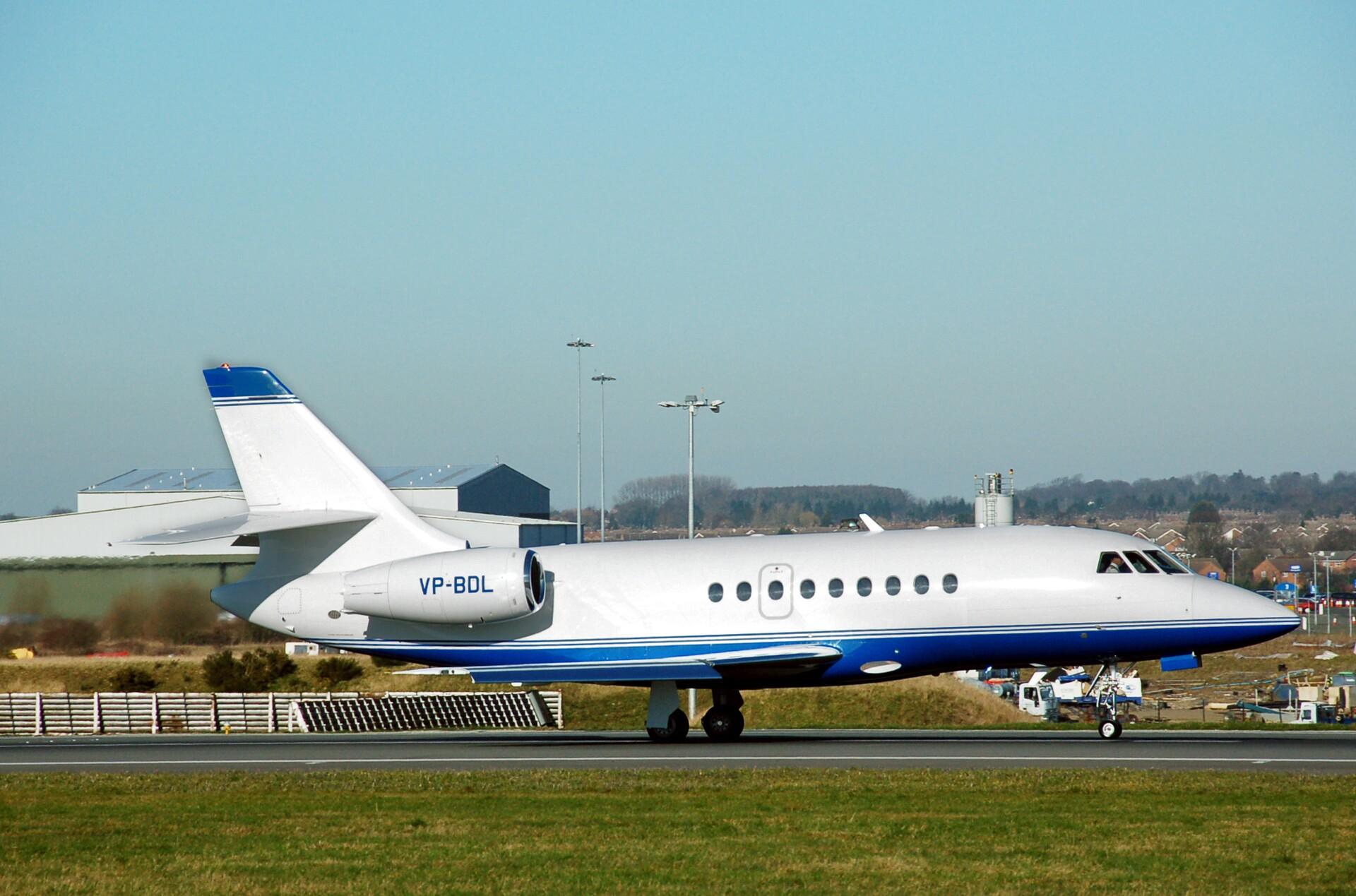
News. Three notices are open. None is a final airworthiness directive, and none has an effective date. The photograph is Falcon 2000 VP-BDL at Luton on 3 February 2005. It is one model in the first proposal only. It is not a Mystère-Falcon 50, a Falcon 2000EX or a Falcon 6X, and it is not a picture of the engines in the third notice.
NPRM 2026-23074, Falcon 50 and 2000 torque links
On 12 November 2026 the FAA proposed a directive for all Dassault Model Mystère-Falcon 50, Falcon 2000 and Falcon 2000EX airplanes. Document 2026-23074 is at 91 FR 72823. Docket No. FAA-2026-13805, Project Identifier MCAI-2026-00064-T. Comments are due 28 December 2026. Paragraph (b) names no earlier FAA AD.
The proposal would adopt EASA AD 2026-0012, issued 19 January 2026 and effective 2 February 2026, which covers the same three models, all serial numbers, including the F50EX commercial variant. EASA says a quality escape may have left high-temperature oxidation in the upper and lower torque links, so a reduced life limit is required. If not corrected, EASA says the gear could fail. The Mystère-Falcon 50 is included because of design similarity.
For a Group 1 aeroplane, one with an affected gear installed, EASA requires replacement with a serviceable gear before the affected part exceeds 7,100 flight cycles since first installation. Affected assemblies are part numbers GA65183-1, GA65184-1, GA65185-1 and GA65186-1, with serial numbers in Appendix 1 of the EASA AD. This article does not copy that appendix. The Dassault bulletins are F50-557, F2000-464 and F2000EX-516, each at original issue dated 30 October 2025.
The FAA estimates 683 airplanes of U.S. registry, which is the three models, not a count of affected parts. The notice gives no worldwide total. A footnote says up to 178 of those airplanes have an affected part. The table uses 36 work-hours at $85, $3,060, plus up to $300,000 for a new gear: up to $303,060 a product and up to $53,944,680 for the 178. Rebuilding by replacing the upper and lower torque-link assemblies would cost $48,990. The footnote does not say that figure includes the 36 hours. The manufacturer, the FAA says, indicates some or all cost may be under warranty. The notice does not say which airplanes. It was issued on 3 November 2026.
NPRM 2026-23229, Falcon 6X limitations
On 16 November 2026 the FAA proposed a separate directive for certain Dassault Falcon 6X airplanes. Document 2026-23229 is at 91 FR 73483. Docket No. FAA-2026-13815, Project Identifier MCAI-2026-00009-T. Comments are due 31 December 2026.
Paragraph (c) applies to Falcon 6X airplanes with an original airworthiness certificate, or an original export certificate of airworthiness, issued on or before 17 November 2025. Airplanes certificated after that date are outside the proposal because, the FAA says, they must already meet the limitations in the approved type design. The action would follow EASA AD 2026-0002, dated 12 January 2026, except that the FAA would not adopt EASA paragraphs (1), (2), (4) and (5) or the Remarks. Where EASA allows 12 months to revise the maintenance programme, this proposal would require the revision within 90 days after the effective date of a final FAA AD. The initial task compliance time would be the incorporated threshold, or 90 days after that effective date, whichever is later. The FAA estimates 5 airplanes of U.S. registry and $7,650 an operator for the programme change: 90 work-hours at $85. It says the unsafe condition is reduced structural integrity and reduced control if system components fail.
NPRM 2026-23118, PW814GA and PW815GA life limits
The life-limit proposal for Pratt & Whitney Canada PW814GA and PW815GA engines was published on 13 November 2026. Document 2026-23118 is at 91 FR 73179. Docket No. FAA-2026-13811. Comments are due 28 December 2026. Paragraph (b) names no earlier FAA AD. The notice applies to all engines of those two models. It does not name a Falcon airplane, or any other airplane.
Adoption would require the actions in Transport Canada AD CF-2025-71, dated 30 December 2025, which superseded Transport Canada AD CF-2023-73, dated 3 November 2023. P&WC revised the airworthiness limitations manual after some components no longer met the published life limits and inspection intervals. The later revision adds new or more restrictive limits for life-limited parts. Where the Canadian AD uses its own effective date, the FAA would use the effective date of a final FAA AD. No alternative life limit is allowed unless the Canadian corrective-actions section approves it. The FAA says the unsafe condition could damage the engine and the airplane. It estimates 333 engines on U.S.-registry airplanes: 1 work-hour at $85, parts $0, $85 an engine and $28,305 for the 333.