FAA Finalizes an A350 Brake-Rod AD and Proposes Challenger Crack Inspections
AD 2026-22-11 is final and effective 15 December for certain A350-941 airplanes. A separate 10 November NPRM would require crack inspections on certain Challenger 604-variant jets. Comments on that proposal close 28 December.
Organizational byline
Updated November 12, 2026
5 min read
News. Two Airbus and Bombardier documents published on 10 November 2026 are not the same kind of action. AD 2026-22-11 is a final rule for certain Airbus A350-941 airplanes. The Challenger item is a notice of proposed rulemaking. Only the A350 directive has an effective date.
Neither document is the pair of November EASA directives on the A350 stabiliser center joint and the emergency electrical unit, covered separately in that note. Those are EASA AD 2026-0210 and AD 2026-0214. They are not adopted by the FAA rule below.
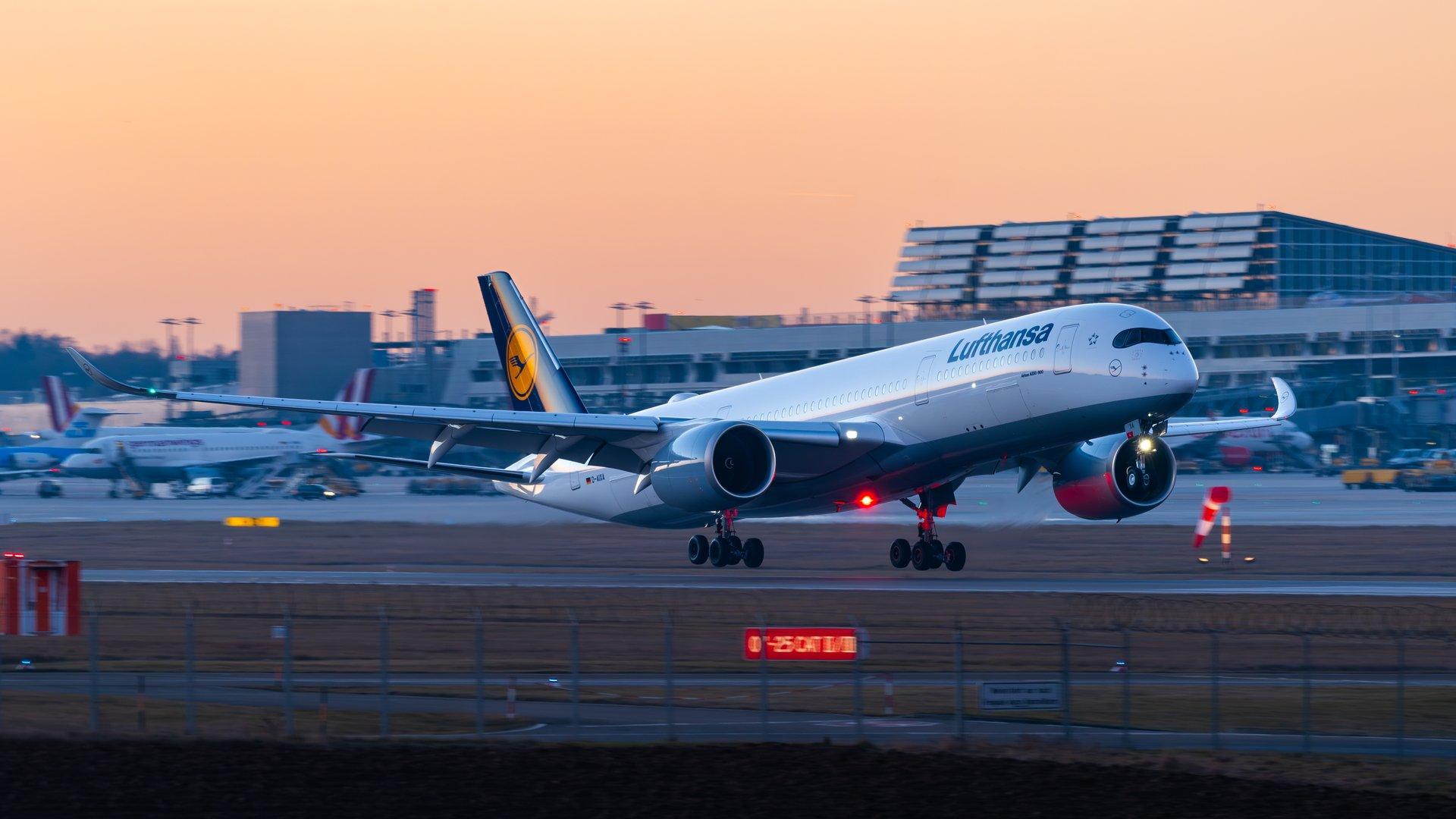
The photograph is Lufthansa A350-941 D-AIXA landing at Stuttgart on 29 December 2016. It is the model named in the final rule. The rule does not identify this airplane. The picture does not show a brake-rod center pin, and it is not a Challenger.
Final: AD 2026-22-11, A350-941 brake-rod center pin
AD 2026-22-11 is amendment 39-23513, Docket No. FAA-2026-2729, Project Identifier MCAI-2025-00726-T, document 2026-22897, at 91 FR 72394. It was issued on 6 November 2026. Paragraph (a) says it is effective 15 December 2026.
It applies to Airbus SAS Model A350-941 airplanes, certificated in any category, as identified in EASA AD 2025-0150, dated 14 July 2025. The applicability line does not say "all A350s," and it does not name the A350-1041. Paragraph (b) names no earlier FAA AD. The subject is ATA 32, landing gear.
The FAA says the AD was prompted by a missing main-landing-gear brake-rod center-pin nut sub-assembly found during an inspection. EASA's account, as the FAA restates it, is that investigation found severe corrosion on the threads and splines of the center-pin and nut sub-assemblies, which could have led to the nut sub-assembly detaching. If not addressed, the FAA says the condition could prevent the main landing gear from extending, and could damage the airplane and injure occupants.
Except for the exceptions in paragraph (h), operators must follow the actions and compliance times in EASA AD 2025-0150. Where that AD uses its own effective date, or 9 May 2025 (the effective date of EASA AD 2025-0095), this FAA AD uses 15 December 2026. The FAA does not adopt the EASA "Remarks" section. Where the referenced material says "Subtask 321162-40100060004," the FAA requires that text to be read as that subtask or the subtask that applies to the airplane's configuration. That last exception was added after a comment from Delta Air Lines, which said the named subtask does not fit every affected A350-941. The Air Line Pilots Association supported the proposal without change.
As the FAA summarises EASA AD 2025-0150, the work is a detailed visual inspection of the nut, lock ring, end plate, pin, and nut threads, and replacement of the pin sub-assembly if required. Extra work applies if a sub-assembly was put back without lockwire and sealant. The EASA AD also specifies reporting results, including no findings, and reporting is not one of the FAA's exceptions. Delta asked to treat a paint-repair note in Airbus Alert Operators Transmission A32P034-24, Revision 01, dated 27 May 2025, as optional. The FAA said that note is under a required-for-compliance paragraph and that a different process needs an alternative method of compliance. The AD is an interim action. The proposal was published on 30 March 2026 (91 FR 15569).
The FAA estimates 3 U.S.-registry airplanes. Compliance labor is up to 7 work-hours at $85, up to $595 an airplane, with no parts in that line. On-condition replacement is estimated at 20 work-hours plus $30,399 in parts. The FAA says it cannot tell how many airplanes will need the replacement. The inspection intervals remain in EASA AD 2025-0150 and are not copied here.
Proposal: Challenger 604-variant cracks
The Challenger document is not final. Document 2026-22899, at 91 FR 72467, Docket No. FAA-2026-13808, Project Identifier MCAI-2024-00785-T, proposes a new AD for certain Bombardier Model CL-600-2B16 (604 Variants) airplanes, as identified in Transport Canada AD CF-2024-47, dated 23 December 2024. Comments are due 28 December 2026. The DATES section sets that deadline and no effective date. The notice was issued on 5 November 2026.
The FAA says reports found cracks on the lower wing plank at the rear spar, wing station 59 to wing station 65, on the web and/or the flange. Its account of the Transport Canada AD says six non-destructive-testing procedures tied to airworthiness-limitations tasks could leave cracks undetected, which could lead to structural failure. The proposed inspections, as the FAA describes the Canadian AD, are eddy-current and ultrasonic checks of that wing plank, of the forward face of the pressure-bulkhead frame under the stiffeners between left and right buttock line 9.00 at fuselage station 409.00, and of the vertical-stabilizer front-spar-to-frame fitting lower legs at fuselage station 755.00, with repair or rectification if a crack is found.
If adopted, the FAA AD would require the Canadian AD in full, except that the Canadian effective date would become the FAA effective date, and the FAA would not require the reports to the manufacturer that the Canadian material specifies. The FAA calls the proposal an interim action. It estimates 201 U.S.-registry airplanes, at up to 24 work-hours and no parts, up to $2,040 an airplane and up to $410,040 for the fleet. It says it has no definitive data for the on-condition repairs.
The serial numbers and the flight-cycle thresholds are in Transport Canada AD CF-2024-47. That AD was not the text read for this article, so those limits are not restated. The proposal does not ground an airplane and does not set a shop date.